So, here on Kinkajousreadtoo, it’s double author interview week. I recorded these a while back, so, sorry for the delay in publishing them.
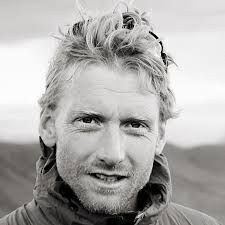
My second interview this week is with adventurer and author, Alastair Humphreys. He who wrote: The Boy Who Biked The World, The Girl Who Rode The Ocean and Against The Odds among others.
You really need to check out his answer to question 4, if you are a teacher, what amazing ideas for how to use the stories in the classroom!
This was an audio recording originally so if there are any grammatical errors, I apologise.
Thank you so much to Alastair for his time.
In his words, “Okay, let’s go.”
Question one. Why did you choose a character to enact your journey rather than use an autobiographical style?
I chose a character to enact the boy who biked the world because I thought that children would be more interested to read about a kid having adventures than an adult. Then when I wrote about a girl rowing across the Atlantic Ocean, the same principle applied of I thought kids would enjoy reading about kids. But using a fictional figure here to tell my truthful story was also an opportunity to have a girl as the star of the show
I did this because there are not enough books out there about girls having adventures. And I wanted to try to appeal to a different readership. But when I went to speak to my publisher about having a girl as the star of the show, the publisher told me that boys don’t read books about girls. Girls aren’t interested in adventures. The book would sell more copies if it was about a boy who wrote the ocean rather than the girl. This struck me as ridiculous and it’s definitely not the world that I want. boys or girls to be growing up in. So I decided to publish the book anyway, even if it meant earning less money than if I’d swapped the word girl for boy throughout my manuscript. I know that many girls have enjoyed reading the boy who bikes the world, and I hope they’ll enjoy this book too. And I see no good reason why boys shouldn’t appreciate both of the stories.
Question two. Your stories are always so full of positivity. For children out there who may be struggling, do you have any personal advice with how to cope?
My advice to children who may be struggling is something that I would definitely have ignored if someone had said this to me as a child. But the first thing I would say is to realise that far more children are struggling than you might realise. I bet you are not the only person in your class who finds something hard and is worried or anxious about something in life. So hopefully, you can realise that even the noisy, cheerful, laughing group of kids have their own worries and struggles. And I’d really encourage you to tell your teacher and ask for help. I know that is so hard to do. But they will help make your life better. You’re not alone and ask for help.
Question three. Do you have any writing routines?
Yes. All my writing is based very much on routine. I try to force myself to write even on the days when I can’t be bothered. If I only wrote when I really felt in the mood for it. I wouldn’t get much done. So I prioritise trying to write about 1000 words a day. First thing, when I start work each morning I know that if I write 1000 words every day, then that’s good progress. It doesn’t even matter if the words aren’t actually that brilliant. I can always go back and edit them later. The hardest part for me of writing books is getting the first draft written down. So that’s the vital part of my routine is just write write write even when you can’t be bothered.
Question four, how would you like teachers to use your book in the classroom?
My favourite example of teachers embracing the story of rowing the ocean was a school in Yorkshire who recreated my Atlantic rowing boat in their classroom, marking it out on the floor so that the class could see how small it was bringing a rowing machine into the classroom, so children could realise how difficult and repetitive it is to row for so long. They ate dehydrated food. They even brought in a bucket as a toilet although thank goodness did not actually use that haha other ways that I would like teachers to use the book is to use it as a springboard for children to search online for other adventurers and explorers that inspire them. Perhaps you could ask the children which environment they’d be most interested to explore themselves, oceans, deserts, mountains, etc. Then ask them if they’re interested to learn about men, explorers or women explorers, and ask them if they’re interested in Guinness World Records, or perhaps the first people in history to explore these places. And then they can use Google and chat GPT to find out about people who’ve done other amazing adventures. And then perhaps work out a plan for their own journey and to consider the things that they would need to do if they were to put a plan into action.
Question five, who inspired you to write and explore?
That’s interesting, because it pretty much flows on from what I gave as the last answer, which is I was inspired to write and explore by reading about other people who’ve done big adventures people like Ranulph Fiennes, and Benedict Allen. I read their books when I was doing my A levels. And then when I was at university, I read loads of Expedition books of mountaineering and polar stories. And it was very much reading the stories of other explorers that made me want to travel. And because I was inspired to adventure through reading books, I think it was then a natural progression that I wanted to write books of my own.
Question six, what’s your next project?
I don’t actually know what my next project is. For myself. In terms of adventures. I’ve just finished writing a book called Local which was about exploring the single map that I live on for a whole year and encouraging people to seek nearby nature. And wildness. In terms of my writing for children. I am now writing fully fictional books. So everything I’ve written so far has been based on my own experiences. But I’ve run out of my own adventures to talk about haha. So I am now writing a book where Lucy from the girl who rode the ocean, partners up with Tom from the boy who bites the world, and the two of them are now successful. Influences I haven’t quite worked it out yet, but there are some sorts of influences YouTubers, something like this, which gives them a platform in order to be able to go off and have lots of adventures. And they are going to go off and retrace the roots of famous expeditions through history. And in doing so will have adventures have their own.dot.so That’s what I’m writing at the moment.
Thank you, and good luck.
 Kinkajousreadtoo
Leave a comment